
Should You Get a TrackMan Session Before Buying New Clubs?
Usually, yes. A TrackMan session before a club fitting tells you your real ball speed, launch angle, spin rate, smash factor and carry for every club, so a fitter is matching equipment to your actual swing rather than a guess. Golf Center of Arlington runs supervised TrackMan sessions outdoors and emails you the full report.
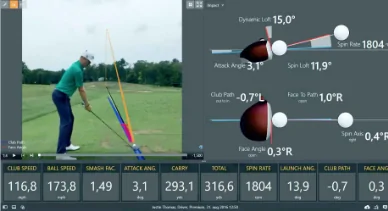
New clubs are expensive, and most golfers buy them on feel, a friend's advice or whatever the store demo bay said on a good day. A TrackMan session gives you a baseline in your own swing, on a real range, before anyone tries to sell you a shaft. This page covers when it is worth doing, which numbers matter and how Golf Center of Arlington fits into the process. It is part of our full guide to shot tracking and swing data: Toptracer and TrackMan compared.
Why get swing data before a fitting?
A club fitting is a matching exercise. The fitter changes loft, shaft, weight and head design until the numbers improve. That only works if the "before" numbers are honest. Three things make a TrackMan session at Golf Center of Arlington a better baseline than a quick test in a retail bay.
Real ball flight
Sessions run outdoors on the real range. You see actual carry and actual curve, not a projection. Spin and launch mean more when the ball lands on grass.
A supervisor, not a salesperson
A professional supervisor runs the radar and explains the numbers. Nobody is trying to move a driver off the rack, so the baseline is about your swing, not a product.
Your own report
All data and swing video are emailed to you in a web report. Take it to a fitting anywhere, or to a lesson, and compare it against the fitter's numbers.
There is a second benefit. Sometimes the baseline shows that the problem is not the club. A smash factor well below the norm or a face angle wide open to the path is a swing issue, and a new driver will not fix it. Knowing that before you spend money is the whole point.
Which TrackMan numbers matter for a club fitting?
A TrackMan session reports ten metrics. Five of them drive most fitting decisions.
| Number | What a fitter does with it |
|---|---|
| Ball Speed | Sets your distance ceiling and points toward the right shaft flex and head design for your speed. |
| Launch Angle | Decides loft. Too low and you leave carry on the table; too high and the ball balloons. Fitters adjust loft and shaft to move launch into a window that fits your ball speed. |
| Spin Rate | Paired with launch. High spin with a driver costs distance in wind; too little spin makes the ball fall out of the air. Head, shaft and loft all change spin. |
| Smash Factor | Tells the fitter whether contact is consistent enough to trust the other numbers. Low smash factor means work on strike before buying for distance. |
| Carry | Carry for every club builds your gapping chart. Even gaps of roughly 10–15 yards between clubs are the goal; overlapping or missing gaps point to which clubs to change. |
The other five metrics, Club Speed, Attack Angle, Club Path, Face Angle and Dynamic Loft, explain why the ball numbers look the way they do and are just as useful for a lesson. Every one of them is described on what a TrackMan session tells you about your golf swing.

When should you skip straight to the fitting?
Not everyone needs the extra step. Be honest about which column you are in.
Do TrackMan first if you…
- Do not know your carry distances for each club
- Fight a slice, hook or low ball flight and suspect the swing
- Are replacing a whole set and want a gapping chart
- Want a neutral baseline to compare against a fitter's numbers
- Plan to take lessons anyway and want one report for both
Go straight to a fitting if you…
- Already have recent launch monitor data from a lesson
- Are replacing one club, such as a putter or a single wedge
- Have a consistent swing and only need a shaft or loft tweak
- Are attending a Callaway or Titleist fitting day and can get numbers on the spot
Get your baseline before you buy. TrackMan sessions at Golf Center of Arlington are supervised, outdoors and finished with an emailed report and video you can hand to any fitter.
Book a TrackMan SessionHow do club fittings work at Golf Center of Arlington?
Golf Center of Arlington does not sell a standing club-fitting package, and no fitting price is published. What the range does host are Callaway and Titleist club fittings at its seasonal events: Swing Into Spring Fest in March, the Masters Weekend Party in April and Golftober Fest in the fall, whose 2026 date is Saturday, October 17, 4–9 PM. Those days are a practical way to test current heads and shafts from major manufacturers on the same outdoor range where your TrackMan baseline was recorded. The special events page lists what is coming up.
Book a TrackMan session a few weeks before an event with Callaway or Titleist fittings. Bring the emailed report to the fitting tent. When the fitter's numbers for a new club beat your baseline by a meaningful margin in carry, launch and spin, you have a real reason to buy. When they do not, you have saved yourself several hundred dollars.
What is the step-by-step process?
- Book a TrackMan session online. See current pricing when you book. Sessions are by appointment at 1301 NE Green Oaks Blvd, Arlington, TX 76006.
- Bring the clubs you are thinking of replacing. Hit each one enough times for the supervisor to capture a reliable average, not one lucky swing.
- Ask for carry gapping. Have the supervisor note carry for every club so you can see where the gaps overlap or open up.
- Read the report at home. It arrives by email with all data and swing videos. Circle the clubs with the worst smash factor, the odd launch and spin combinations, and any gap wider than about 15 yards.
- Take the report to the fitting. Ask the fitter to beat your baseline, not just to find a club that feels good.
- Re-test after you buy. A second session or a few Toptracer buckets on the bay confirms the new carry numbers in real conditions.
What if the numbers say the swing is the problem?
That happens often, and it is good news for your wallet. A low smash factor, a steep attack angle with the driver or a face that is several degrees open to the path are swing patterns, and a fitter can only work around them. Golf Center of Arlington's Golf Integrated Skills Program uses TrackMan inside its Refinement Program ("Full Swing Mechanics on TrackMan"), so the same report becomes the starting point for a lesson. Lessons are performance-based: they end when you are ready, not when the clock runs out.
Between sessions, every covered bay and grass hitting area has a Toptracer screen included with any bucket ($21 for 60 balls, members $15), so you can check carry distances week to week. The range is open Monday–Saturday 8 AM–11 PM and Sunday 8 AM–10 PM, rain or shine.
Frequently asked questions
Does Golf Center of Arlington do club fittings?
Not as a standing service with a published price. Callaway and Titleist club fittings appear at the range's seasonal events, including Swing Into Spring Fest, the Masters Weekend Party and Golftober Fest. What Golf Center of Arlington offers year-round is the supervised TrackMan session that gives you the baseline numbers a fitter needs, emailed to you as a web report.
Which is more important for a driver fitting, launch angle or spin rate?
They work as a pair, so neither wins alone. The goal is a launch and spin combination that maximizes carry for your ball speed. As a rough guide, many fitters aim for a driver spin rate somewhere in the low-to-mid 2,000s rpm with a launch in the low-to-mid teens, but the right window depends on your speed and attack angle, which is exactly what a TrackMan baseline reveals.
Can I use my TrackMan report at any golf store?
Yes. The web report emailed after your session is standard TrackMan output with all ten club and ball metrics and your swing video. Any fitter who works with launch monitor data can read it. Bring it on your phone or print it, and ask the fitter to compare their numbers for a new club directly against your baseline.
How many swings does it take to get useful fitting numbers?
Enough to see an average rather than one good shot, which is why the session is supervised. Your supervisor will have you hit each club you care about several times and look at the pattern in ball speed, launch, spin, smash factor and carry. Warm up first so the early swings count, and bring the clubs you actually play.
Should I do a TrackMan session before a wedge or putter fitting?
Usually not for a putter, since TrackMan's value is in full-swing club and ball data. For wedges it can help: carry for each wedge, launch and spin show where your gaps sit inside 120 yards and whether a new loft would fill a hole. Ask the supervisor to record your wedges at full and partial swings if that is the purchase you are weighing.
How much does a TrackMan session cost before a fitting?
Golf Center of Arlington does not publish a TrackMan session price, so see current pricing when you book online. Compared with the cost of a full set of clubs bought on guesswork, most golfers find the baseline session an easy decision. Toptracer practice on the bays is separate and included with any bucket from $21.
See your numbers on TrackMan
A supervised session on the real range, with a web report and swing video emailed to you afterward.
Golf Center of Arlington · 1301 NE Green Oaks Blvd, Arlington, TX 76006 · 817-469-9005 · Open Mon–Sat 8 AM–11 PM, Sun 8 AM–10 PM